


Hagastaden
Hagastaden is a neighbourhood and innovation district taking shape between Stockholm and Solna.
Video: Stockholm Business Region
Hagastaden at a glance
Hagastaden brings together businesses, academia and healthcare in a setting that combines vibrant urban life with easy access to nature. Healthcare facilities, laboratories, offices, restaurants and cafés are all within easy reach, with the lively streets of Vasastan on one side and the greenery of Hagaparken and walking paths along Brunnsviken on the other.
Hagastaden is a neighbourhood where people both live and work. It is home to more than 6,200 residents, with workplaces spanning academia, healthcare, public authorities, business and services.
With nearly 250 life science companies, Hagastaden is also a growing life science innovation district. Universities, research infrastructure, healthcare and businesses are concentrated within a compact area, creating favourable conditions for new collaborations, research and innovation.
Hagastaden is part of inner-city Stockholm, an eight-minute walk from Odenplan metro station and around two kilometres from Stockholm Central Station. Hagastaden’s own metro station is expected to be completed in 2029.
Hagastaden: a place for research, healthcare and business
Hagastaden brings together the key elements of the life science ecosystem within walking distance.
- Research and education: Karolinska Institutet, alongside a presence from KTH Royal Institute of Technology and Stockholm University through interdisciplinary initiatives such as SciLifeLab and MedTechLabs. The campuses of KTH and Stockholm University, as well as the Stockholm School of Economics, are also nearby.
- Healthcare: Karolinska University Hospital and St Erik Eye Hospital bring together patient care, education and clinical trials. The area also offers primary care, an urgent care centre and several specialist healthcare providers.
- Business: Around 250 life science companies, ranging from startups to global businesses, alongside a growing number of other technology and knowledge-intensive companies.
- Innovation support: Karolinska Institutet Innovation gives researchers, entrepreneurs and companies access to support, facilities and networks.
- Spaces and meeting places: Laboratories, offices, coworking spaces, conference venues and other venues such as restaurants, cafés and shops bring people and organisations together and help collaborations develop.
The combination of strong research and healthcare environments and a growing business community make Hagastaden important to life science across the Stockholm region.

Hagastaden’s innovation district is both a driver of growth and a hub for life science in the region. Its strong research environments provide a solid foundation for life science businesses.
The proximity of researchers, healthcare providers, businesses and other organisations makes it easier to build relationships, share knowledge and find opportunities to collaborate. For companies, the area offers access to research and innovation environments, as well as expertise and contacts in both academia and healthcare. For researchers and healthcare providers, this proximity creates more opportunities to connect with companies that can help develop new solutions and bring them into use.

Having our office in Forskaren, at the heart of Hagastaden, gives us excellent proximity to partners across healthcare, academia and industry. It strengthens our collaboration within one of Europe’s most dynamic innovation clusters and makes us even more attractive to the very best talent.
A place for connections and knowledge sharing
An innovation district is shaped not only by the organisations based there, but also by the relationships between them. In Hagastaden, Stockholm Science City and other organisations host seminars, networking events and conferences. Coworking and laboratory spaces such as A Working Lab, Convendum, CoW Hagastaden and Office Hub Forskaren create opportunities for both planned and spontaneous encounters.

Hagastaden offers a wide range of events and networking opportunities. People also meet in the lunch queue or over a coffee — the environment inspires knowledge sharing and collaboration.
From vision to a growing neighbourhood
The development of the innovation district has its roots in Vision 2025, signed in 2007 by the City of Stockholm, the City of Solna, Region Stockholm (earlier Stockholm County Council), Karolinska Institutet, KTH Royal Institute of Technology, Stockholm University and representatives of the business community. Their shared ambition was to develop the area into a world-leading location for life science.
Hagastaden has grown through the development of new research and healthcare facilities, business premises, homes, workplaces and meeting places. The neighbourhood continues to develop, connecting Stockholm and Solna.
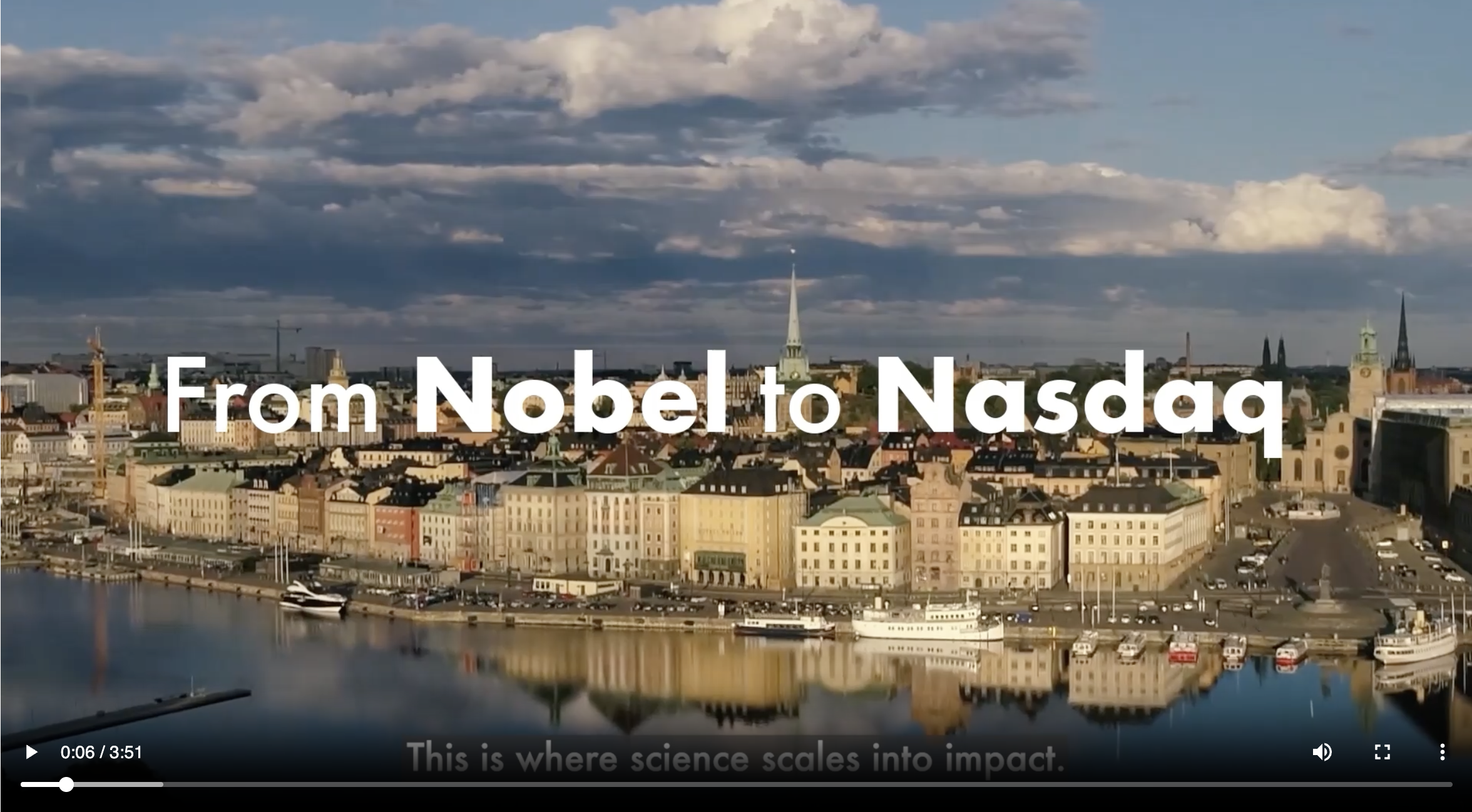
Click the video below to watch a film about Hagastaden. In the film, Annika Östman Wernerson, Christophe Pedroletti and Emelie Antoni share their perspectives on the area’s strengths and opportunities. The link takes you to the Stockholm Business Region website, where you will find the film further down the page.
Hagastaden timeline
2007: Vision 2025 is signed.
2010: Construction begins in Hagastaden, and SciLifeLab opens.
2013: Aula Medica opens.
2015: MSD becomes the first global pharmaceutical company to move into the area.
2016: Karolinska University Hospital’s new hospital building in Solna opens.
2017: Odenplan commuter rail station opens.
2018: Biomedicum and BioClinicum open. St Erik Eye Hospital opens, bringing highly specialised care and ophthalmology to the area.
2022: The Life City building opens.
2023: The Forskaren building opens.
2028–2031: Ericsson relocates its offices to Hagastaden.
2029: A new metro line opens with a station in Hagastaden. The journey to T-Centralen will take seven minutes.
Stockholm Science City’s role in Hagastaden
Stockholm Science City works to develop Hagastaden’s innovation ecosystem by strengthening collaboration between universities, healthcare, businesses and other stakeholders, with life science as its core focus. Our work covers three main areas:
- Knowledge and analysis: We monitor developments in life science and innovation and share insights through seminars, reports, statistics and newsletters.
- Networks and meeting places: We bring people and organisations together to exchange knowledge and develop new collaborations.
- Ecosystem development: We initiate activities and bring stakeholders together around needs and opportunities that no single organisation can address alone.


Explore Hagastaden
Links:
Recruit international talent
Support, tools and guidance for companies looking to attract, recruit and retain international employees.
Live and work in Stockholm
Tips and practical information for anyone looking to move to Stockholm, work here and settle into everyday life.
PDF:
Illustrated map and short information about Hagastaden >